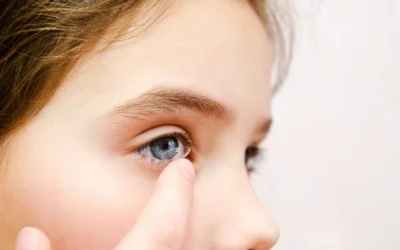
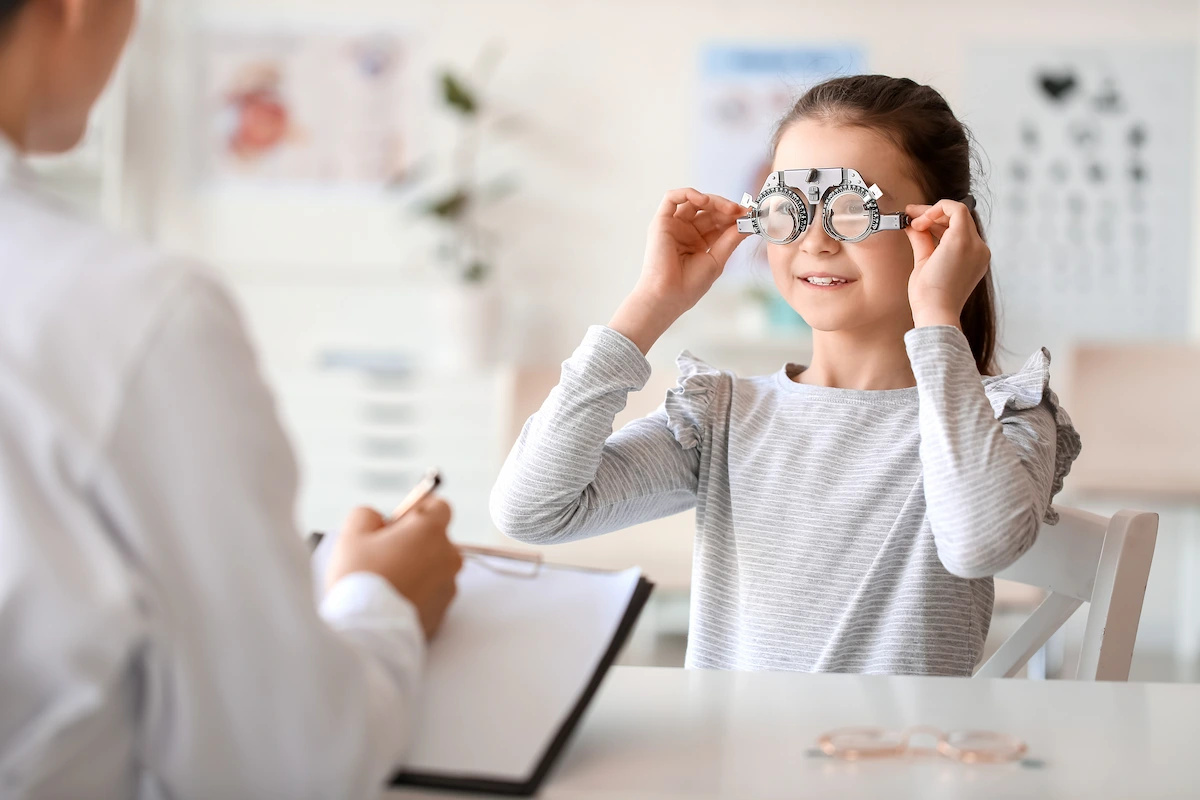
If your child is becoming nearsighted, the best age to start myopia management is usually as soon as myopia is diagnosed. For many children, that happens between ages 6 and 14, when nearsightedness often begins and may progress more quickly. Starting early gives your eye doctor the best opportunity to slow changes in the eye and help protect your child’s long-term vision.
Myopia, or nearsightedness, means distant objects look blurry while close-up vision is clearer. Glasses or contacts can correct blurry vision, but myopia management is different. Its goal is to help slow the progression of myopia during the years when a child’s eyes are still growing.
Why does age matter for myopia management?
Age matters because myopia often progresses fastest in childhood. The younger a child is when myopia starts, the more time it may have to worsen. Higher levels of myopia can increase the risk of eye health problems later in life, including retinal detachment, glaucoma, cataracts, and myopic macular degeneration.¹
That does not mean every nearsighted child will develop serious complications. It does mean early diagnosis and monitoring are important. When myopia is caught sooner, your eye doctor can track changes and recommend treatment options before vision changes become more significant.
What signs might mean my child is developing myopia?
Children do not always know their vision has changed, especially if the change happens gradually. A comprehensive eye exam can identify myopia, but parents may notice signs such as:
- Squinting to see the board, TV, or distant signs
- Sitting very close to screens or holding books close
- Complaining of headaches or tired eyes
- Struggling to see clearly during sports or school activities
- Frequently rubbing their eyes or blinking
- Saying that faraway objects look blurry
If your child has any of these symptoms, it may be time to schedule an eye exam, even if they recently passed a school vision screening.
Is there an ideal age to check for myopia?
There is no single “perfect” age for every child, but children should have regular eye exams throughout childhood. The American Optometric Association recommends eye exams before first grade and then annually for school-aged children, or as recommended by an eye doctor.²
A child may need earlier or more frequent monitoring if they have:
- A parent or sibling with myopia
- Rapid vision changes
- Heavy screen or near-work demands
- Limited outdoor time
- Trouble seeing clearly at school
If myopia is found, your eye doctor can explain whether your child is a good candidate for myopia management.
Can teens still benefit from myopia management?
Yes. While earlier treatment is often better, teens may still benefit from myopia management if their prescription is continuing to change. Myopia can progress into the teenage years and sometimes early adulthood, so it is worth asking about treatment options even if your child is older.
The right plan depends on your child’s age, prescription, eye health, lifestyle, and how quickly their vision is changing.
Help protect your child’s vision early
The best time to ask about myopia management is when your child first shows signs of nearsightedness or receives a myopia diagnosis. Early care can help your child see clearly now while supporting healthier vision for the future. Schedule an eye exam to find out whether myopia management is right for your child.
References
¹ Nearsightedness: What is myopia? American Academy of Ophthalmology
² Comprehensive pediatric eye and vision examination. American Optometric Association