
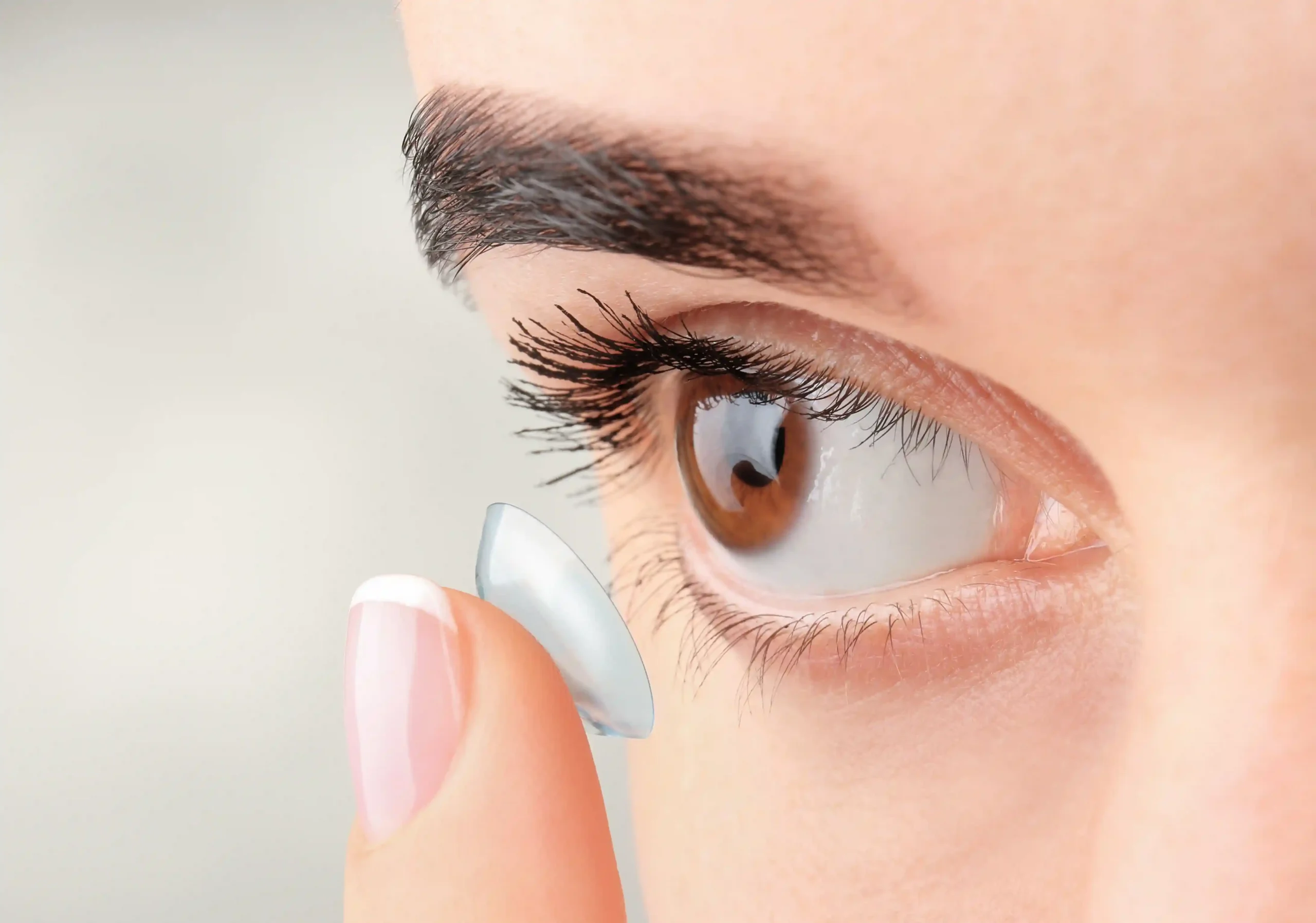
A properly fitted contact lens should be easy to forget you are wearing. It should provide clear, stable vision, stay centered on your eye, and feel comfortable throughout the recommended wear time. If your lenses regularly feel dry, shift when you blink, or cause redness, a contact lens exam can help determine whether your fit, prescription, or lens material needs to change.
Contact lenses are not one-size-fits-all. The curvature and size of your eye, your prescription, tear film, and daily visual needs all affect which lens is right for you.
What does a good contact lens fit feel like?
Well-fitted contact lenses should feel comfortable shortly after you insert them. You may be aware of a lens for a few moments at first, but you should not have ongoing irritation or feel like something is stuck in your eye.
Signs your contact lenses fit properly include:
- Clear vision that stays stable when you blink
- Lenses that remain centered on the eye
- Comfortable wear without persistent dryness, burning, or itching
- No frequent tearing, redness, or sensitivity to light
- Lenses that move slightly with each blink but do not slide around excessively
Your eye doctor evaluates the way lenses move, center, and interact with the surface of your eyes during a fitting. Even if a lens feels acceptable at first, an exam can reveal whether it is supporting healthy, comfortable wear.
What are signs that your contact lenses do not fit properly?
Discomfort is not something you should have to “get used to.” A poor fit can cause symptoms that affect both your vision and eye health.
Schedule an evaluation if you notice:
- Blurry or fluctuating vision
- A lens that moves too much, rotates, or falls out
- A lens that feels tight or difficult to remove
- Redness, irritation, burning, or frequent dryness
- Gritty sensations or the feeling that something is in your eye
- Headaches or eye fatigue after wearing contacts
- Light sensitivity or excessive tearing
These symptoms can also be caused by dry eye, allergies, buildup on the lens, or an outdated prescription. Do not try to solve persistent symptoms by wearing lenses longer or switching products without professional guidance.
Could specialty or scleral lenses be a better fit?
Some patients need more than a standard soft contact lens. Specialty contact lenses may help people with astigmatism, dry eye, irregular corneas, or vision needs that are not fully corrected with traditional lenses.
For certain corneal conditions or difficult-to-fit eyes, scleral lenses may be an option. These larger lenses rest on the white part of the eye and create a fluid-filled space over the cornea, which can improve comfort and vision for appropriate candidates.
Get comfortable, clear vision with the right fit
Contact lenses should support clear vision without ongoing discomfort. If your lenses feel wrong, move too much, or leave your eyes red and irritated, it is time for a professional evaluation. Schedule a contact lens exam to find a lens that fits your eyes, prescription, and lifestyle.