
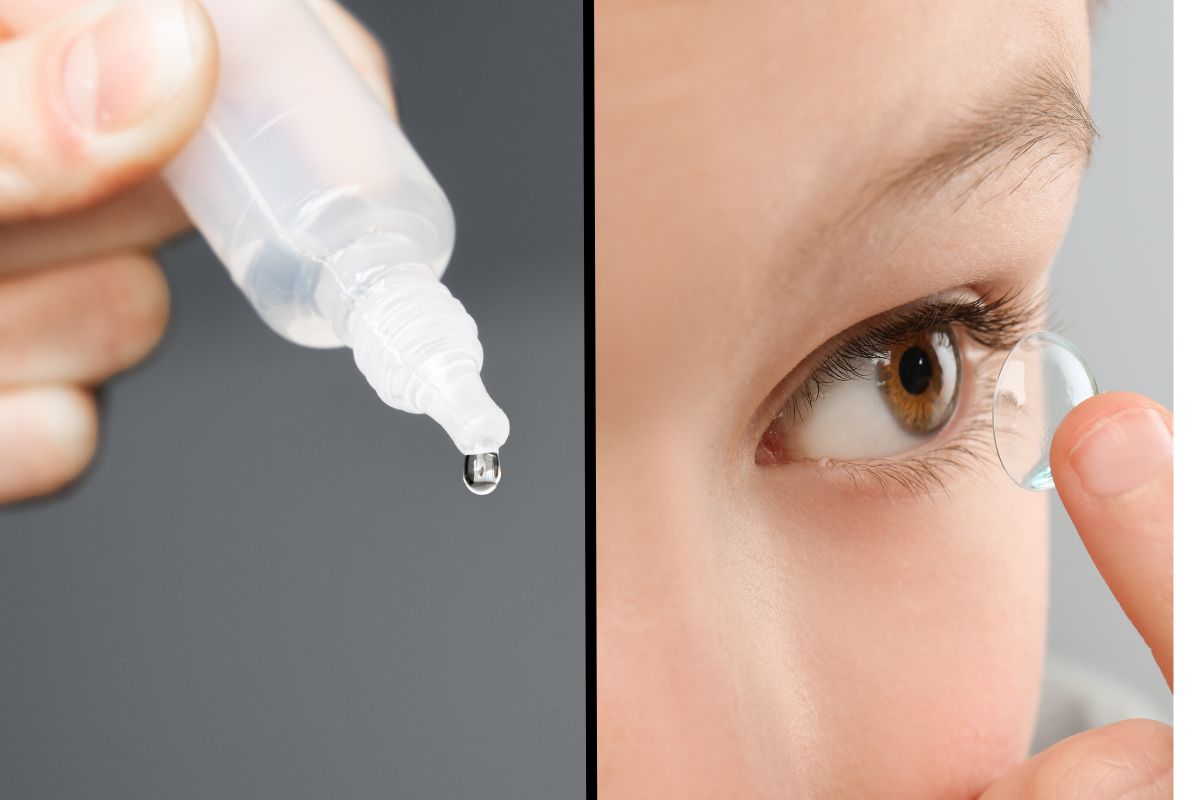
When a child’s nearsightedness keeps progressing, parents often ask whether low-dose atropine drops or multifocal contact lenses are the better choice. Both may help slow myopia progression, but neither is automatically best for every child.
The right myopia control plan depends on your child’s eye health, daily routine, and ability to use treatment consistently.
Is your child ready for a contact lens routine?
Multifocal soft contact lenses are worn during the day. They correct distance vision while helping manage myopia progression, making them appealing for children who want clear vision without glasses during school, sports, and activities.
However, contacts require a dependable routine. Your child needs to wash and dry their hands, insert and remove lenses correctly, follow the replacement schedule, and avoid sleeping or swimming in lenses unless their eye doctor says otherwise.
Multifocal contacts may be worth discussing if your child:
- Wants freedom from glasses during the day
- Is comfortable touching their eyes
- Can follow lens-care and replacement instructions
- Has family support for building a consistent routine
FDA-approved vs.off-label multifocal contacts for myopia control
MiSight® 1 day is currently the FDA-approved soft contact lens specifically indicated to slow myopia progression in children who meet its approved use criteria.
Other multifocal contact lenses may also be considered for myopia management, but they may be prescribed off-label for that purpose. “Off-label” does not mean the lens is unapproved or unsafe. It means the lens is FDA-approved for contact lens wear and vision correction, but not specifically FDA-approved to slow myopia progression.
Your eye doctor may recommend a lens such as MiSight or another multifocal design based on your child’s prescription, eye health, vision needs, and ability to follow a daily lens routine.
Would a nightly drop routine work better?
Low-dose atropine is typically applied at bedtime. It may be a practical choice for children who are not ready to handle contact lenses or prefer wearing glasses during the day.
The drops also need to be used consistently. A parent or caregiver may need to administer them each night, especially for younger children. Low-dose atropine may be worth discussing if:
- Your child is not ready for daytime contacts
- A caregiver can manage a dependable nightly routine
- Glasses provide clear, comfortable daytime vision
- Contact lens care would be difficult right now
Low-dose atropine has been shown to slow myopia progression in children. The appropriate concentration and expected results can vary, so it should be prescribed and monitored by an eye doctor. In the United States, it is commonly used off-label for myopia control.
Find the right plan for your child
There is no single myopia-control treatment that works best for every child. Both low-dose atropine and multifocal contacts have evidence supporting their use, but response can vary based on the child and the specific treatment plan.
The best option is one your child can use safely and consistently. Schedule a myopia management consultation in Pembroke Pines to discuss whether low-dose atropine, multifocal contacts, or another approach fits your child’s needs.